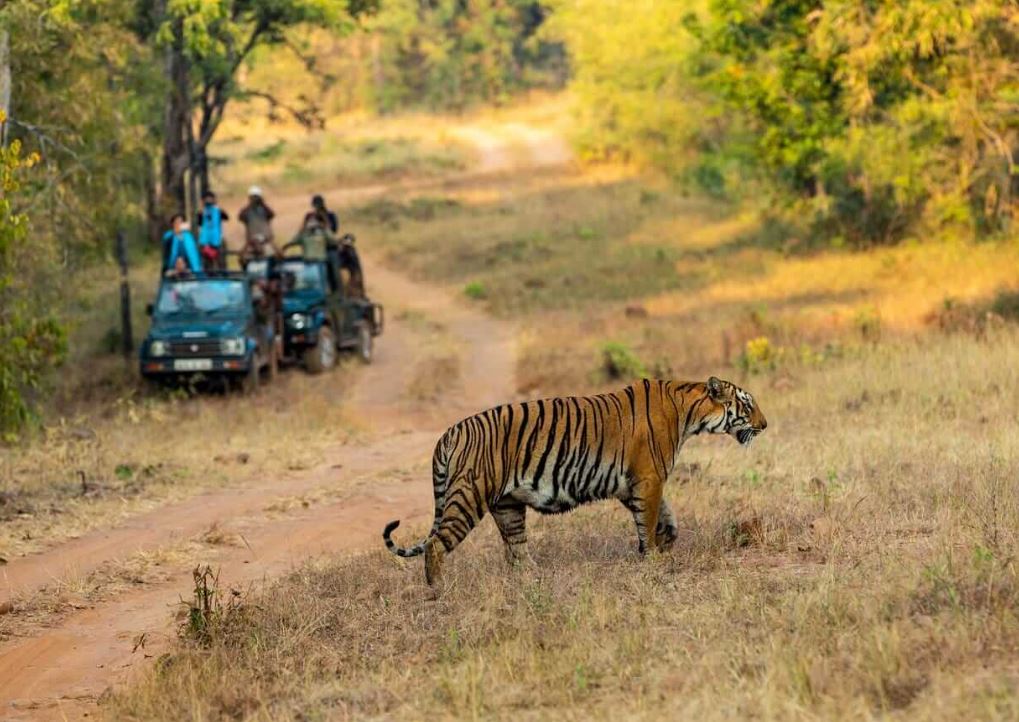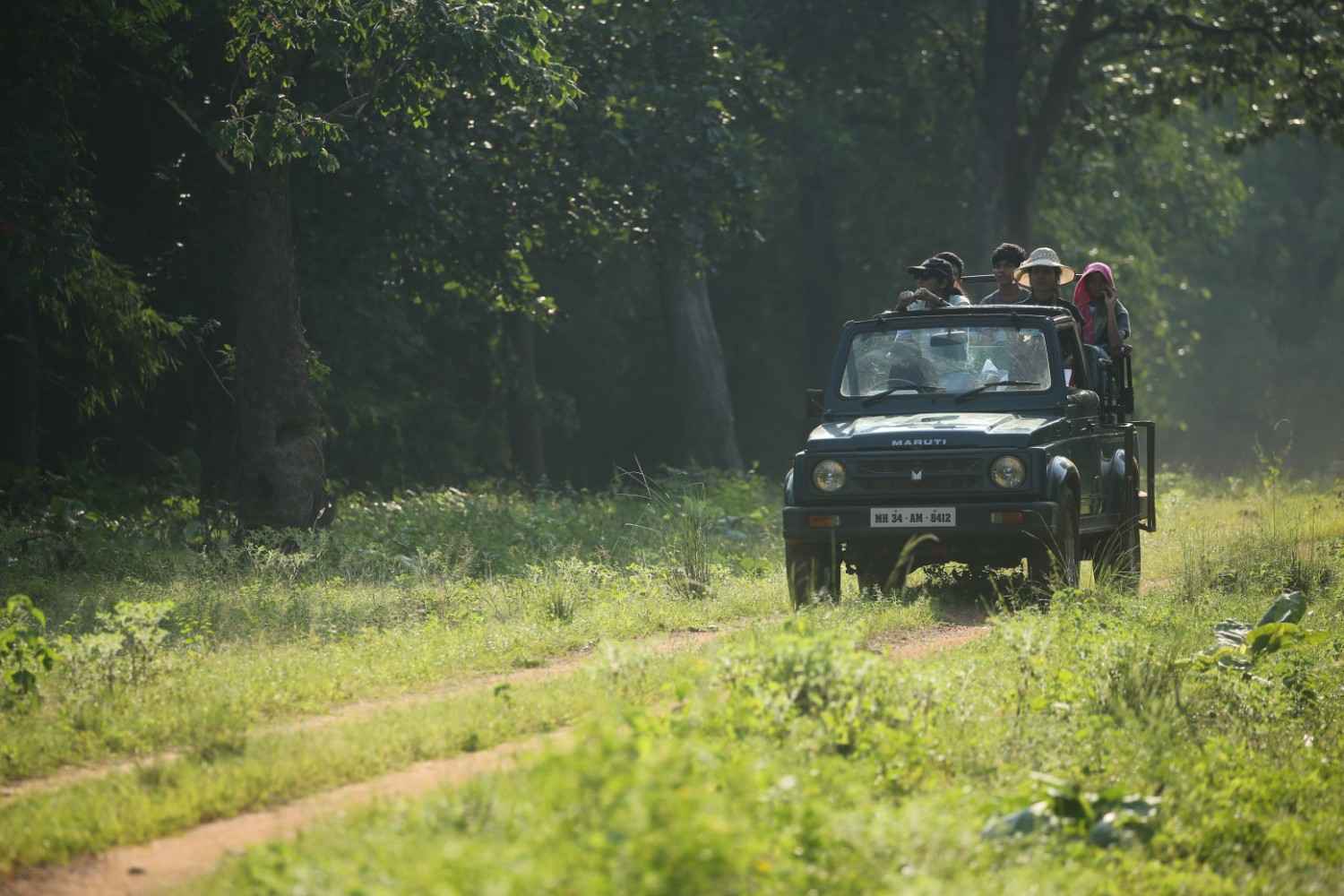
Before Tadoba Jungle Safari Booking Know This Story
Some places are meant to be seen, and some are meant to be felt. Tadoba National Park is undoubtedly of the latter sort. Most trips to Tadoba start with an idea of booking a Tadoba jungle safari, an idea of dates, and an eagerness to immerse oneself in one of India’s premier tiger reserves. What is unknown to most travelers is that Tadoba is far more than an exotic location for spotting exotic animals. It is a place with a rich history, with every inch of its landscape bearing testimony to its cultural heritage. There are stories of kings, people, and legends beneath its dense foliage and calm waters. If you are to experience Tadoba, it is to experience a place with every road, every silence, and every echo being imbued with meaning.
Tadoba Was Once a Living Kingdom Not Just a Forest
Long before Tadoba National Park had become a name known to and loved by wildlife enthusiasts, it had been part of a kingdom ruled by Gond kings. For them, it had not been a forest. It had been their world. They had not lived around it; they had lived in it. The lakes, trees, and animals had their place. There had been balance and rhythm in nature that did not need to be regulated.
Then, things had begun to change. The Marathas had ruled, and then the British. With every change, there has been a change in perception, too. The forest had begun to be perceived not as something to be possessed, but as something to be managed. However, through all these changes, the essence of the land had remained. It had remained, waiting to be sensed by anyone who cared to look beyond the surface. At the heart of this land is a story that will not be forgotten.
The Story of Taru Still Lives in These Forests
If you spend enough time in and around Tadoba, especially in and around villages, you will hear stories about Taru. Taru was a Gond headman. He was a man who was respected, powerful, and had a special connection with nature. One day, in and around a still lake, he encountered a tiger. What exactly happened is something that has been narrated in many different ways over time. However, in every version, it is said that Taru’s bravery left an indelible mark on the land. A shrine was set up in his honor around that lake. Over time, that place came to be known as “Taru-ba,” which eventually came to be known as Tadoba. When you make a Tadoba Jungle Safari booking, you may not be aware that you are actually entering a place that carries this story in its silence. You will not see it; you will only feel it.
A Time When Forests Were Meant to Be Used, Not Protected
The story of Tadoba, like other forests in India, had gone through a tough time. When Tadoba was declared a Reserved Forest in 1879, it was not with any intention of protecting it. The intention was timber. The dense forest was meant to be used. Even in the early 1900s, there were certain restrictions on tiger hunting. However, they were not too stringent. Hunting permits were issued to allow the privileged class of people to hunt in the forests. The forests were used for sport. Even in the 1930s, certain rules were being put in place. However, they were not stringent enough to stop hunting altogether. A small sanctuary was created around Tadoba Lake in 1935. However, hunting continued in other parts of the forest. This is history, which may not be too far away but is still important. This is because the peaceful and respectful experience that you have with your Tadoba Jungle Safari booking today was not always there.
How Tadoba Slowly Became What It Is Today
The real shift began after independence. In 1955, Tadoba was declared a national park. It is considered one of the oldest in India. It is an improvement in the right direction, but it is also important to realize that it is still in an environment of disturbance. The shift occurred in the 1970s, when hunting was completely stopped. This is when the forest really began to heal. In 1986, much larger areas were protected under the Andhari Wildlife Sanctuary. In 1993, Tadoba National Park and Tiger Reserve were merged to form the Tadoba Andhari Tiger Reserve, which is over 600 square kilometers.
This is Tadoba National Park today
So, when you are planning your Tadoba Jungle Safari booking, it is not simply an entry into a forest. It is an entry into an environment that has rebuilt itself over time. Today, Tadoba is felt rather than seen. Today, the place is all about the wildlife, including the tigers. It is what you feel, however, which is most memorable. There is a quietness in the place that is difficult to describe.
The forest does not try to impress you in any way. It does not demand your attention. It just exists, which in itself is an invitation to slow down your pace. The experience of the place is not rushed in any way. It happens slowly, almost without you realizing it. The shrine of Taru still exists in the area near the lake, quiet and unassuming. It is not pointed out as an important place to see, but it contains the essence of the history of the place. A Tadoba jungle safari booking may be a thought in your mind, an intention to see, to experience, and to feel. It becomes something else, however, once you are in. It becomes a connection.
A connection to a land that has seen kings and hunters, loss and recovery. A connection to tales that have not been written but remembered. And a connection to a rhythm that is very different from the rest of the world. And that is why Tadoba stays with you. Because long after the safari is over, you do not just remember what you saw but also how it made you feel.
Recent Posts
Reach Tadoba National Park Without the Hassle
Tadoba Safari Booking India: Best Safari Zones to Choose in 2026
Choose The Right Tadoba Safari Tickets For Your Kind of Adventure
Hidden Costs In Tadoba Jeep Safari You Should Know